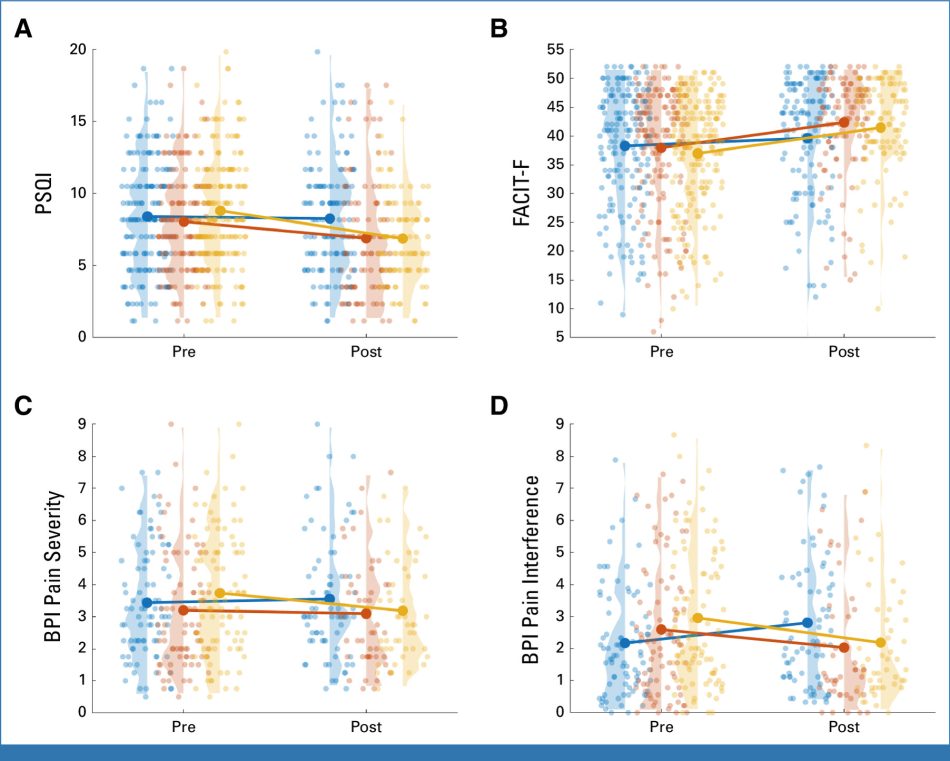
A partially randomized trial of 587 cancer survivors reported that mindfulness-based and tai chi/qigong programs were each associated with less fatigue and less interference from pain than a waitlist, according to findings in the Journal of Clinical Oncology. Participants had finished primary treatment and reported at least moderate distress. The mindfulness program ran for nine weeks and the tai chi/qigong program for 11.
Neither program reduced how severe pain felt, and only tai chi/qigong showed a statistically significant sleep improvement. The researchers found no significant difference between the two approaches. Because fatigue, pain and sleep were secondary outcomes with multiple comparisons, the authors say the results should be read as an overall pattern rather than as proof of individual effects. People with cancer-related symptoms should discuss options with their care team.